

Top Energy-Efficient Smart Gadgets for Homeowners
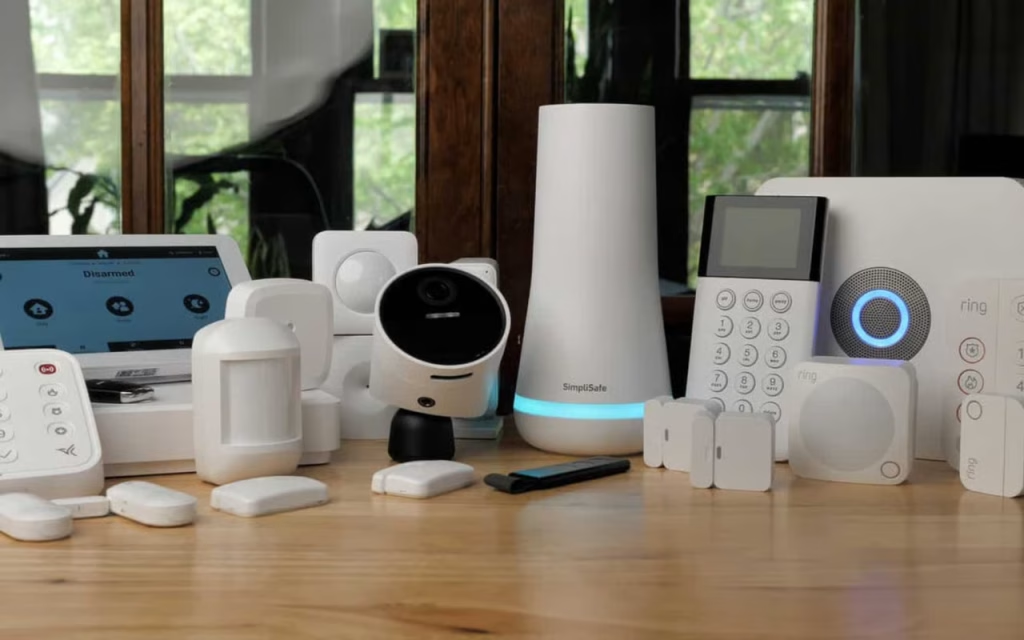
Residential energy consumption accounts for a significant portion of a household monthly budget. Heating, cooling, constant appliance standby draw, and inefficient water heating drive up utility bills without adding actual comfort. Modern smart home technology has evolved beyond novelty voice commands into practical resource management systems. Equipping a house with dedicated energy-efficient hardware helps homeowners monitor consumption in real time, automate waste reduction, and cut recurring expenses.
Investing in smart energy hardware yields measurable returns. These devices identify phantom loads, adjust output according to real-time occupancy, and adapt to changing weather conditions. The following breakdown covers the most effective energy-saving smart gadgets available today, detailing how they function, their economic advantages, and how to integrate them for maximum efficiency.
Smart Thermostats
Heating and cooling make up more than half of the energy consumption in an average US single-family home. Traditional manual and basic programmable thermostats rely on fixed schedules that fail when personal routines change or sudden temperature swings occur.
Smart thermostats solve this mismatch by using machine learning, remote room sensors, and geofencing technology. When linked to a smartphone, the system detects when the house is empty and switches to an energy-saving eco-mode. It returns the home to a comfortable temperature right before residents return.
-
Occupancy and Proximity Sensing: Devices track activity across different rooms using auxiliary sensors, heating or cooling only the active living zones rather than unoccupied spaces.
-
Weather Forecasting Integration: The system pulls local weather data to adjust run times before exterior temperature spikes or freezes happen, preventing HVAC overwork.
-
HVAC System Diagnostics: Smart thermostats track filter health and runtime diagnostics, alerting homeowners to equipment inefficiencies before major mechanical failures occur.
Upgrading to an Energy Star certified smart thermostat typically cuts heating and cooling costs by 8 to 12 percent annually, allowing the hardware to pay for itself within the first two years of operation.
Smart Energy Monitors
A standard electric meter records total kilowatt-hour consumption, but it cannot explain which appliances are driving up the monthly bill. Whole-home smart energy monitors install directly inside the main breaker panel to measure real-time electricity flow across individual circuits.
Using inductive current transformers clamped around the main service lines and specific branch circuits, these monitors sample electrical signals thousands of times per second. Machine learning algorithms identify the unique electrical signatures of distinct devices, such as the compressor in a refrigerator, a water heater element, or an electric vehicle charger.
-
Real-Time Consumption Tracking: Homeowners can view live wattage usage on a mobile dashboard to see exactly how much power is drawn at any given second.
-
Phantom Load Detection: The hardware identifies devices that waste energy in standby mode, such as entertainment centers, gaming consoles, and idle computer setups.
-
Custom Cost Alerts: Users can set consumption thresholds that send mobile notifications when energy usage exceeds predefined limits or during peak-rate utility windows.
Pinpointing these specific energy drains enables homeowners to eliminate wasted power and change daily habits with clear, actionable data.
Smart Plugs and Power Strips
Even when turned off, many electronics continue to draw small amounts of electricity to power displays, internal clocks, and remote control receivers. This standby power, commonly known as vampire load, can represent up to 10 percent of an average home electricity usage.
Smart plugs and advanced power strips bridge the gap between dumb appliances and a connected energy management ecosystem. By plugging lamps, coffee makers, desktop computers, and audiovisual gear into smart outlets, homeowners gain granular control over power delivery.
-
Automated Scheduling: Cut power completely to office gear and entertainment hubs during overnight hours or workdays.
-
Load Sensing Outlets: Advanced smart power strips feature primary and secondary outlets. When the primary device, such as a television, is turned off, the strip automatically severs power to peripheral components like soundbars and media streaming boxes.
-
Remote Cutoff: Turn off forgotten curling irons, space heaters, or window air conditioners from anywhere through a mobile app.
These simple, low-cost devices provide an immediate return on investment by entirely shutting down non-essential electronics when not in use.
Smart LED Lighting Systems
Lighting constitutes roughly 15 percent of residential electricity use. While switching from incandescent bulbs to standard LEDs is already a major step forward, smart lighting systems optimize power consumption even further.
Smart LED setups allow users to automate schedules, control brightness levels with precision, and integrate ambient light sensors. Because dimming an LED directly reduces the wattage it pulls from the wall, running bulbs at 70 or 80 percent brightness generates subtle, comfortable illumination while extending bulb lifespan and lowering power draw.
-
Daylight Harvesting: Ambient sensors measure natural daylight entering the room and lower smart bulb output accordingly.
-
Automated Motion Triggering: Lights in hallways, basements, garages, and closets illuminate only when movement is detected and shut off after a set duration of inactivity.
-
Geofenced Vacancy Protocols: Exterior and interior lights turn off automatically whenever the last resident leaves the property radius.
Combining efficient LED engineering with intelligent automation ensures that lighting is used only when and where it is needed.
Smart Water Heater Controllers
Water heating is the second-largest energy expense in most homes, behind only space heating and cooling. Standard tank water heaters maintain a full volume of water at high temperatures 24 hours a day, constantly cycling on to compensate for standby heat loss even when the household is asleep or away at work.
Smart water heater controllers attach to existing electric or hybrid water heaters to manage heating schedules dynamically. These controllers learn household water usage patterns over time, heating water right before peak morning and evening routines and dropping into eco-modes during intermediate hours.
-
Demand-Response Capability: Many smart water controllers integrate with utility programs to shift heating cycles away from expensive peak-demand hours.
-
Vacation Modes: Homeowners can switch the tank to an idle state with a single tap, scheduling it to resume regular heating hours before returning home.
-
Leak Detection and Auto-Shutoff: Many systems include moisture sensors around the base of the tank that alert owners and shut down heating elements if a leak occurs, preventing property damage and wasted energy.
Adding smart control to a water heating setup substantially reduces standby thermal loss without sacrificing hot water availability.
Smart Blinds and Automated Shades
Windows are responsible for substantial heat gain during hot summer afternoons and severe heat loss during cold winter nights. Managing solar heat gain through physical window coverings is a proven efficiency tactic, but manually adjusting blinds across multiple rooms every day is inconvenient.
Smart motorized blinds and shades automate this process based on real-time solar tracking, interior temperatures, and time of day.
-
Summer Cooling Optimization: Shades on south- and west-facing windows close automatically during peak sunlight hours to block radiant heat, lowering the burden on the air conditioner.
-
Winter Passive Heating: Blinds open during sunny winter mornings to allow natural solar heat into the house, then shut tightly at dusk to provide an extra layer of thermal insulation against cold glass.
-
HVAC Coordination: High-end smart shades synchronize with smart thermostats to close coverings before the air conditioner needs to cycle on.
This passive thermal regulation reduces HVAC mechanical strain and maintains more consistent room temperatures naturally.
Smart Irrigation Controllers
Energy efficiency in a modern home extends to water management. Standard timer-based sprinkler systems often water landscapes regardless of actual soil moisture, running during rainstorms or mid-day heat when evaporation rates are highest. This wastes water and increases the energy load required by municipal treatment plants or private well pumps.
Smart weather-based irrigation controllers use local weather data, soil types, and plant profiles to deliver precise watering schedules.
-
Predictive Weather Adjustments: Systems automatically skip scheduled waterings if rain is forecast, if wind speeds are high enough to cause drift, or if freezing temperatures could damage plants.
-
Cycle and Soak Features: Water is applied in short bursts to allow full soil absorption, preventing runoff and pump waste.
-
Flow Meter Monitoring: Add-on flow sensors detect underground line breaks or stuck valves, alerting the homeowner and stopping the water flow to prevent catastrophic waste.
Upgrading to a smart irrigation controller eliminates outdoor water waste while keeping lawns healthy through automated, data-driven schedules.
FAQ
How do smart home gadgets save energy compared to manual habits?
Smart gadgets remove human error and inconsistency from energy management. While manual adjustments require constant attention, smart devices use occupancy sensors, automated schedules, and real-time data to adjust power consumption instantaneously when nobody is in a room or when external conditions change.
Can smart gadgets still function if the home internet connection drops?
Most smart devices retain their internal programming, basic schedules, and manual functionality during an internet outage. However, remote control through mobile apps, live weather-based adjustments, and voice commands will remain unavailable until the network connection is restored.
How much money can an average homeowner save annually using smart energy devices?
A well-integrated system that combines a smart thermostat, smart plugs, LED controls, and energy monitoring typically saves a homeowner between 10 and 25 percent on total utility costs annually. The exact savings vary depending on home size, climate region, and local utility rates.
Do smart energy gadgets consume significant power just by staying connected to Wi-Fi?
No. Smart gadgets use low-power microcontrollers and optimized wireless protocols like Zigbee, Z-Wave, Thread, or low-energy Wi-Fi. The standby power consumed by these devices is minimal, typically under one to two watts, which is far outweighed by the energy they save across major household appliances.
What is the difference between Zigbee, Z-Wave, and standard Wi-Fi for smart gadgets?
Standard Wi-Fi connects devices directly to the home router, which can cause network congestion if many gadgets are added. Zigbee and Z-Wave use low-power mesh networks that pass signals between devices without overloading the router, consuming less electrical power and operating with greater range across large homes.
Are smart energy devices difficult to install without hiring a professional?
Most smart gadgets, including smart plugs, light bulbs, motorized shade retrofits, and basic thermostats, are designed for straightforward DIY installation using standard household tools. However, whole-home energy monitors and in-line water heater controllers require working directly with electrical panels and high-voltage wiring, which is best handled by a licensed electrician.
Do utility companies offer financial incentives for installing smart energy hardware?
Yes. Many electric and gas utility providers offer direct rebates, discounted device marketplaces, and bill credits for customers who install certified smart thermostats, water heater controls, and energy monitors that support peak-demand energy reduction programs.
 Essential Gadgets for Setting Up a Remote Office
  The Evolution and Impact of Gadgets in Modern Life
  Downturn Proof Gadgets With the Cloud
  Awesome Smartphone Gadgets
  The Best Computer Gadgets On The Market
  Speaking Gadgets For Your Visually Impaired – Simplifying Existence
  A Comprehensive Guide to Modern WiFi Technology
  How Content Delivery Networks Speed Up the Web
  The Evolution of Live Streaming in Digital Marketing
  The Evolution of Operating Systems Across Platforms