

How VPNs Can Help You Avoid Being Tracked by Websites

In today’s digital age, online privacy has become a growing concern. With the rise of personalized advertising, data collection practices, and invasive tracking technologies, it can often feel like your every move on the internet is being monitored. While this data collection may seem harmless at first, it raises questions about how much of your personal information is being gathered and what it is being used for. Fortunately, there is a tool that can help mitigate these risks: Virtual Private Networks (VPNs). These privacy-enhancing tools are becoming increasingly popular for protecting personal data, and they are especially effective in preventing websites from tracking your online activities. In this article, we will explore how VPNs work to keep you anonymous online and how they can help you maintain your privacy while browsing the web.
What Is a VPN and How Does It Work?
A VPN is a service that allows you to establish a secure and private internet connection by routing your internet traffic through a remote server. When you connect to a VPN, your internet traffic is encrypted, which ensures that your data is shielded from external parties, such as hackers or unauthorized third parties. Moreover, the VPN replaces your real IP address with one from its server, masking your location and making it difficult for websites to pinpoint where you are browsing from.
This combination of encryption and IP address masking provides a significant layer of privacy, which makes it far harder for websites to track you based on your real identity or location. Whether you’re browsing websites, shopping online, or simply scrolling through social media, a VPN provides the tools necessary to safeguard your privacy from invasive tracking methods.
Blocking Third-Party Trackers
Many websites rely on third-party trackers to gather data about their visitors. These trackers can be used for various purposes, such as personalized advertising, behavior analysis, and even sharing your data with other companies. These trackers can follow you from one site to another, building a detailed profile of your online habits.
A VPN helps disrupt this tracking by masking your IP address and encrypting your traffic. Because your real IP address is hidden, the trackers cannot easily associate your browsing behavior with your personal identity. Websites are unable to follow you across multiple sites, and they lose the ability to gather data based on your actual location or browsing history.
While VPNs alone cannot completely block all types of tracking, they can make it significantly more difficult for trackers to pinpoint you or link you to specific online actions. Many VPN providers also include ad-blocking and anti-tracking features as part of their service, which can further reduce the amount of intrusive tracking that occurs while you browse.
Preventing Geolocation Tracking
One of the most common methods websites use to track users is through geolocation tracking. By accessing your IP address, websites can determine your physical location, allowing them to provide localized content, display location-based ads, or even track your movements across websites in specific regions.
When you use a VPN, your IP address is masked, and it appears as though you are browsing from the server’s location, rather than your actual location. This prevents websites from accurately determining where you are located, thereby protecting you from geolocation-based tracking. Whether you’re traveling abroad or simply want to keep your location private, a VPN ensures that your online movements are not tied to a specific place.
Additionally, VPNs can allow you to choose the location of the server you connect to, providing the flexibility to appear as though you are in a different city, country, or even continent. This feature can be helpful for bypassing geographic restrictions or accessing content that may be blocked in certain regions, all while maintaining your privacy.
Masking Your Browsing History
Another aspect of online tracking is the collection of browsing data. Websites can track not only your location but also your search history, preferences, and online behavior. This information can then be used to serve targeted advertisements, which can sometimes feel invasive or overly personal. For example, if you’ve recently searched for vacation destinations, you might be bombarded with ads for hotels and flights the next time you browse the web.
By using a VPN, you can mask your browsing history. Since your real IP address is replaced with that of the VPN server, websites cannot associate your online behavior with your personal identity or previous browsing activities. This helps ensure that you remain anonymous while browsing, reducing the likelihood of seeing ads based on your past searches or online habits.
Moreover, because your internet traffic is encrypted, third-party entities, such as your internet service provider (ISP), cannot track or log your browsing activities. This adds an additional layer of privacy, particularly if you are concerned about your ISP tracking your movements online or selling that data to advertisers.
Protecting Your Data on Public Networks
Public Wi-Fi networks, such as those found in cafes, airports, and hotels, are notorious for their lack of security. These networks are often unsecured, making them vulnerable to cyberattacks. Hackers can easily intercept your data, including passwords, login credentials, and any other personal information you send over an open Wi-Fi connection.
By using a VPN, you encrypt your internet traffic, making it virtually impossible for anyone on the same network to intercept your data. This is especially important when you’re browsing the web or accessing sensitive accounts on public Wi-Fi. By masking your online identity and encrypting your communications, a VPN offers robust protection against the risks associated with unsecured public networks.
Conclusion
With the increasing risks to online privacy, using a VPN has become a crucial tool for those who wish to protect their data and avoid being tracked by websites. VPNs provide multiple layers of security, from masking your IP address to encrypting your internet traffic, making it more difficult for websites, advertisers, and third-party trackers to monitor your activities. Whether you’re concerned about personalized ads, geolocation tracking, or simply want to browse anonymously, a VPN is a powerful tool that helps ensure your privacy remains intact while navigating the digital world. By using a VPN, you can enjoy a safer, more secure online experience, free from invasive tracking methods and data collection practices.
 Buy Backlinks to Improve Domain Authority and Search Visibility
  How Wearables Are Reframing the Caloric Output Data From Zumba Classes in Singapore
  AI-Driven Retention Prediction: How Singapore’s Yoga Class Booking Platforms Identify and Re-Engage Lapsing Members
 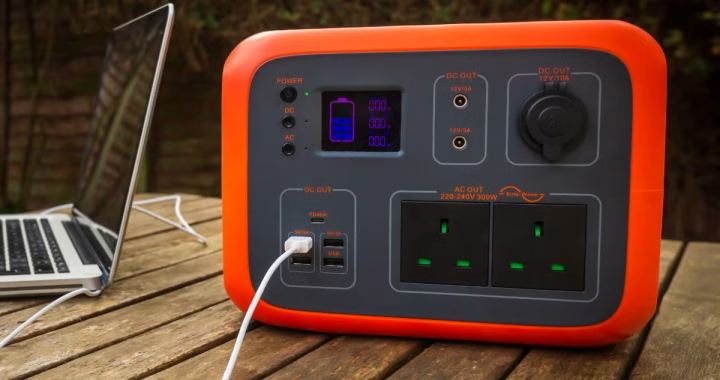 Top Battery Packs and Portable Power Solutions
  Best Photo to Video AI and Free AI Face Swap Tools of 2026 (Founder-Tested Guide)
  How to Get WiFi for an Event: Planning, Solutions, and Best Practices
  A Comprehensive Guide to Modern WiFi Technology
  How Content Delivery Networks Speed Up the Web
  The Evolution of Live Streaming in Digital Marketing
  The Evolution of Operating Systems Across Platforms